
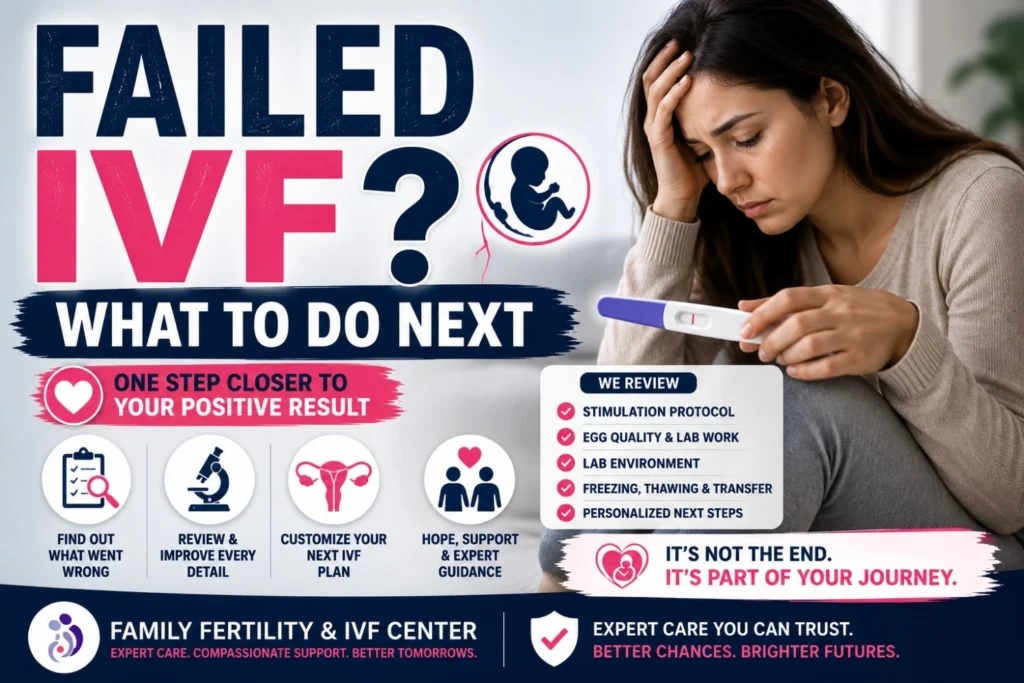
A failed IVF cycle hurts. There’s no softer way to say it.
You did everything right. The injections. The appointments. The waiting. And still, the test came back negative.
If you’re reading this after a failed cycle, take a breath. One unsuccessful attempt does not mean parenthood is no longer possible. It means something needs a closer look.
Dr. Sophia Umair Bajwa often tells her patients this exact thing. A failed cycle is information, not a verdict. The goal now is to figure out what that information is telling you.
Start With a Full Review
Don’t rush into another cycle right away. Slow down first.
A good fertility team will sit down and go through the entire process. Every step gets checked. Nothing gets skipped.
This review usually covers four areas.
1. The Stimulation Protocol
Every woman responds to fertility medication differently. What works for one patient can fail for another.
The dosage matters. The type of injection matters. Even the timing matters.
If your last protocol didn’t produce the right number or quality of eggs, that’s a clue. Your next protocol should look different, not identical.
2. Egg Retrieval and Lab Work
This is where things get technical, but stay with me.
After retrieval, eggs go through ICSI, where a single sperm gets injected directly into the egg. Sperm selection matters here too. Healthier sperm, better odds.
Some labs go a step further and select sperm based on DNA integrity, not just appearance under a microscope. That small detail can change outcomes.
3. The Lab Environment Itself
You don’t see this part. But it matters more than most people realize.
Temperature. Air quality. Humidity. Even lighting inside the lab affects how embryos develop.
A poorly controlled lab environment can quietly sabotage an otherwise strong cycle. This is why choosing where you do IVF matters just as much as choosing when.
4. Freezing, Thawing, and Transfer
Cryopreservation sounds simple. It isn’t.
Freezing an embryo, storing it, then thawing it later requires precision. So does the actual transfer.
Frozen embryo transfers follow very specific protocols. Timing has to be exact. Monitoring has to be consistent. Small mistakes here can undo good work done earlier in the process.
IVF Is a Team Effort
Here’s something Dr. Bajwa repeats often in her sessions. IVF success isn’t about one doctor or one lucky cycle.
It’s about a team.
Doctors, embryologists, and lab staff all need to work in sync. From your very first consultation to the final transfer, every person on that team plays a role.
When something goes wrong, a strong team catches it early. When something goes right, it’s usually because ten small things went right together, not one big thing.
So What Should You Do Next?
Here’s a simple checklist for after a failed cycle.
Ask your doctor to explain exactly what happened. Request specifics, not just “we’ll try again.”
Ask about your stimulation protocol. Was it customized to you?
Ask about your embryo grading. Were there signs the lab noticed but didn’t flag as concerning at the time?
Ask about your uterine environment. Sometimes the embryo isn’t the problem. The lining is.
And most importantly, ask if genetic testing makes sense for your next cycle. It isn’t necessary for everyone, but for some couples, it changes everything.
Emotional Recovery Matters Too
Nobody talks about this part enough.
A failed IVF cycle isn’t just a medical setback. It’s an emotional one too.
Give yourself permission to grieve it. You’re allowed to feel disappointed, even angry. These feelings are normal, not weakness.
Talk to your partner. Talk to a counselor if you need to. Don’t carry this silently.
Physically, most doctors recommend waiting at least one full cycle before trying again. This gives your body time to reset and gives you time to process emotionally too.
Small Things That Help
While you wait for your next steps, a few habits can support your body.
Sleep well. Hormone regulation depends heavily on quality sleep, more than people assume.
Eat balanced meals. Skip extreme diets right now. Your body needs steady fuel, not restriction.
Reduce stress where you can. This won’t guarantee anything, but chronic stress does affect hormone levels.
Stay off social media comparisons for a while if it helps. Everyone’s journey looks different, and comparing timelines rarely helps anyone feel better.
Common Myths People Believe After a Failed Cycle
Let’s clear up a few things.
Myth: “One failed cycle means my body can’t do this.” Not true. Many successful pregnancies happen after a first, second, or even third unsuccessful attempt.
Myth: “More embryos always mean better odds.” Not necessarily. Quality matters far more than quantity here.
Myth: “If the embryo was Grade 1, the problem must be me.” Not always true either. Sometimes it really is the embryo, even when it looks perfect.
Myth: “IVF failure means natural conception is impossible too.” These are two separate conversations. A failed cycle doesn’t rule out other paths.
Letting go of these assumptions helps you approach your next step with a clearer head.
How Long Should You Wait Before Trying Again?
There’s no single answer that fits everyone. It depends on your body, your emotional readiness, and what your review uncovers.
Physically, one full menstrual cycle is usually the minimum. This gives your hormones time to reset properly.
Emotionally, there’s no set timeline. Some couples feel ready within weeks. Others need months. Both are completely valid.
Talk to your doctor about timing, but also talk to yourself. Are you ready, or are you rushing because you feel pressure, from family, from age, from a calendar?
Questions to Bring to Your Next Consultation
Write these down before your appointment. It’s easy to forget questions in the moment.
What specifically do you think caused this cycle to fail?
Would you change my stimulation protocol next time, and how?
Should we consider genetic testing for the next round?
Is there anything about my uterine lining we should investigate further?
What’s realistically different about the plan for next time?
A doctor who welcomes these questions is a good sign. One who brushes past them isn’t.
When to Consider a New Clinic
Sometimes the issue isn’t you. Sometimes it’s the clinic.
If your previous provider didn’t explain what went wrong, or brushed past your questions, that’s worth noting. You deserve real answers, not vague reassurance.
A clinic with an experienced embryology team and a doctor willing to walk you through every detail can make a real difference in your next attempt.
Dr. Sophia Umair Bajwa breaks down these exact factors in detail on her YouTube channel, walking viewers through what typically goes wrong after a failed cycle and how each piece gets addressed differently the second time around.
Moving Forward
A failed cycle feels final at the moment. It usually isn’t.
Many couples who face one unsuccessful attempt go on to have successful pregnancies once the right adjustments are made. The key is treating this as a diagnostic step, not a dead end.
If you’re looking for a team that reviews every detail before recommending your next move, Family Fertility & IVF Center in Lahore is worth having that conversation with.
Bring your questions. Bring your reports from the last cycle. A thorough team will want to see them anyway.
Got thoughts on this, or questions from your own experience? Drop a comment here or under Dr. Sophia Umair Bajwa’s related video, and we’ll get into it.