
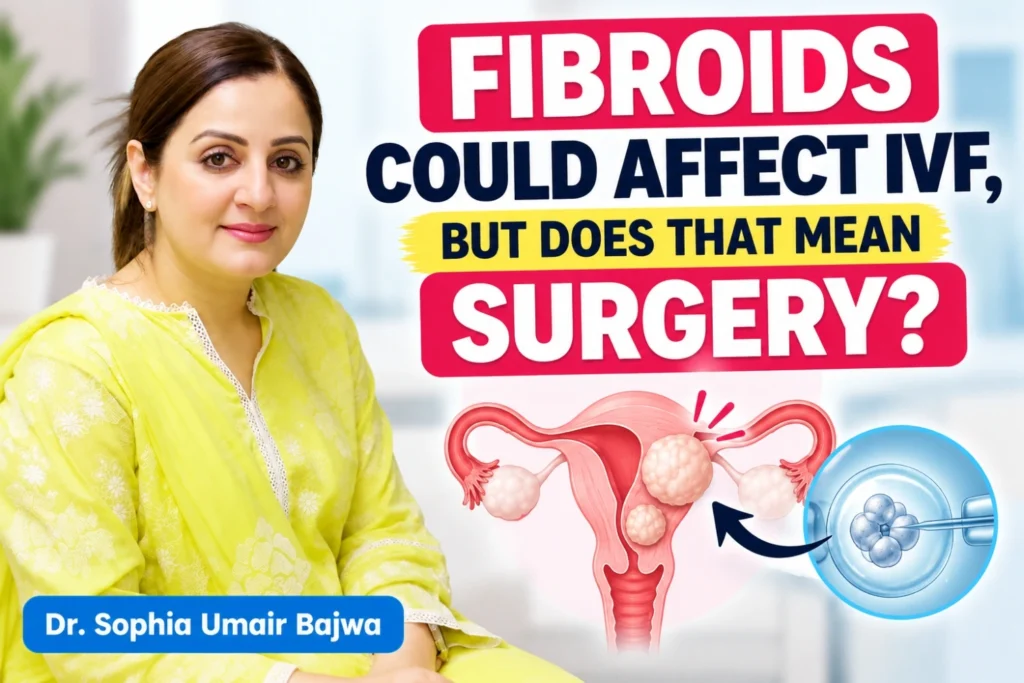
Your ultrasound came back, and there it is: a fibroid.
Before you even finish reading the report, your mind may jump straight to surgery, recovery, and another delay in your fertility journey.
But here’s something that may ease that worry: not every fibroid needs to be removed before IVF.
The decision depends on several factors, especially where the fibroid is located and whether it affects the inside of the uterus.
What to Know About Fibroids and IVF
Fibroids are common, and many women only find out they have one during fertility testing.
Once a fibroid is found, one of the first questions is usually:
“Do I need surgery before IVF or IUI?”
The answer depends largely on where the fibroid is located and whether it affects the uterine cavity.
Fertility specialists usually avoid surgery when there is no clear reason for it.
Surgery can mean extra recovery time, added discomfort, and a delay in fertility treatment.
The goal is to understand whether the fibroid could actually affect pregnancy or whether it can simply be monitored.
When Surgery May Not Be the Best Choice
Some fibroids are located away from the inner cavity of the uterus. Depending on their size, location, and other factors, these fibroids may not require removal before fertility treatment.
This can be reassuring if you have recently been told you have a fibroid.
Simply having a fibroid does not automatically mean you need surgery.
How Doctors Check the Fibroid
Your fertility specialist may use ultrasound or other imaging to see exactly where the fibroid is located.
They look at its position, size, and relationship to the uterine cavity.
This helps them decide whether the fibroid could affect implantation or pregnancy and whether treatment is needed.
When Surgery May Be Recommended
Surgery may be considered when a fibroid affects or grows into the uterine cavity, where an embryo needs to implant.
These fibroids can sometimes interfere with implantation and may affect pregnancy outcomes.
In such cases, removing the fibroid may be recommended before IVF or another fertility treatment.
Why This Difference Matters
Knowing the difference can help you avoid two problems.
You may not need surgery simply because a fibroid was found. At the same time, a fibroid that affects the uterine cavity may need treatment before moving forward.
That is why the location and effect of the fibroid matter so much.
Schedule Your Appointment With Us
There is no single answer for every woman with fibroids.
Your fertility specialist needs to look at your scan and consider the fibroid’s location, size, and possible effect on the uterine cavity.
Dr. Sophia Umair Bajwa explains this topic in detail, including why finding a fibroid does not automatically mean surgery is the next step.
If you have recently been diagnosed with a fibroid and are unsure what it means for your IVF or IUI plans, a proper evaluation can help you understand your options.
At Family Fertility & IVF Center in Lahore, fibroid evaluation can help guide the next step based on your individual situation.
A fibroid diagnosis does not automatically mean your fertility treatment has to stop. The important thing is understanding what your particular fibroid means before making a decision.
You can watch Dr. Sophia Umair Bajwa’s video on this topic for more information and leave your questions in the comments.