
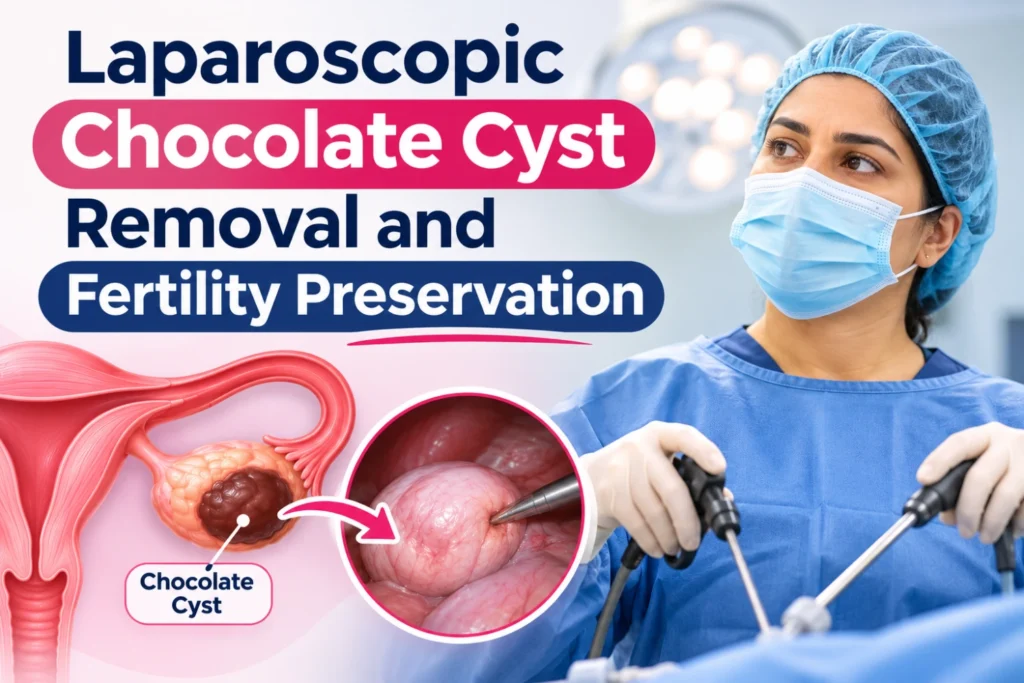
She already had one child. For years, she could not conceive a second, and her periods hurt. A scan finally explained why: a chocolate cyst on one ovary. The surgery that followed raised a bigger question. Could the surgeon remove the cyst without costing her the eggs she needed for another pregnancy?
Our supervising doctor, Dr. Sophia Umair Bajwa, recorded that operation for her YouTube channel. This post walks you through what she did, why each step matters and what it means for your own chances of conceiving.
Secondary Infertility: When the Second Baby Takes Longer
Secondary infertility means difficulty conceiving after you have already had a child. It surprises many couples, because a first pregnancy does not guarantee an easy second one. Endometriosis, tubal damage, age and sperm quality can all play a part. In the video, the patient had painful periods and years of unsuccessful attempts, which pointed toward endometriosis.
When a Chocolate Cyst Needs Removal
Doctors do not remove every chocolate cyst. Dr. Bajwa usually reserves surgery for severe pain or a cyst large enough to interfere with IVF. When surgery makes sense, the aim has two parts. Remove the cyst and protect the ovary.
During laparoscopic cystectomy, the patient receives general anesthesia. The surgeon makes small cuts in the abdomen and inserts a camera. The magnified view lets her separate the cyst wall from healthy ovarian tissue and remove it with care.
How We Protect the Ovary
Your ovary holds your eggs, so every movement near it counts. Dr. Bajwa removes the cyst and keeps as much healthy tissue as she can. Many surgeons also limit heat energy near the ovary, because excess heat can damage egg-bearing tissue.
Even careful surgery can lower ovarian reserve, and repeat operations add to that risk. For that reason, we weigh each decision with you before we operate. We think especially hard before a second surgery for a cyst that returns.
Checking the Fallopian Tubes
Natural conception needs open tubes. During laparoscopy, the surgeon can inspect the tubes directly, and many pass dye through them to confirm they are open. In the video, Dr. Bajwa checks both tubes. Endometriosis can scar the pelvis and distort the tubes, so this check shapes everything that follows. Blocked tubes usually point toward IVF, because the egg and sperm cannot meet naturally.
Measuring Ovarian Reserve Before and After
Doctors often check ovarian reserve with an AMH blood test and an antral follicle count on ultrasound. Together, these results show how many eggs you probably have left. A repeat test after surgery shows whether the operation changed your reserve. We use both sets of numbers to decide how long you can safely try naturally.
Natural Pregnancy or IVF After Surgery?
IVF is not the automatic next step. Natural conception stays possible when the tubes are open, semen quality is normal and ovarian reserve is adequate. Younger women often have more time to try naturally. Older women, or those with other fertility factors, may move to IVF sooner. Endometriosis elsewhere in the pelvis also affects your chances.
Endometriosis can return, so follow-up scans matter. At Family Fertility & IVF Center in Lahore, our team plans those scans with you and builds a trying timeline around your own results.
Recovery After Laparoscopic Surgery
Many women go home the same day or within a day or two, and light activity often resumes within days. Your surgeon sets the exact timeline and tells you when to start trying. Contact her if you develop a fever, heavy bleeding, worsening pain or redness and discharge at the cuts.
Questions to Ask Before Surgery
Go into your consultation with a short list. Ask how much ovarian tissue the surgeon will try to preserve. Ask whether she will check your tubes during the same procedure. Ask how soon you can start trying afterward, and what the plan is if the cyst returns. Clear answers on these four points tell you far more about the surgery than the cyst size alone.
Frequently Asked Question
How long after chocolate cyst removal can I try to get pregnant?
Ask your surgeon. Many doctors encourage you to start trying soon after recovery, because endometriosis can return over time.
Can a chocolate cyst come back after surgery?
Yes. Endometriomas can recur, especially when endometriosis remains elsewhere. Follow-up ultrasounds help catch a new cyst early.
Does laparoscopic cyst removal affect fertility?
It can lower ovarian reserve. It can also improve natural pregnancy chances in some women with endometriosis. We weigh both effects with you.
How do I find out if my tubes are open?
Common methods include a dye test during laparoscopy, an X-ray dye test called HSG, or a special ultrasound.
What if my tubes are blocked after cyst surgery?
Blocked tubes usually mean IVF offers the best chance. We explain your options based on the tube findings.
Can I get pregnant naturally after chocolate cyst removal?
Many women do, especially when the tubes are open and other fertility factors are normal. If pregnancy does not happen within several months, ask about IVF.
Do I need IVF after laparoscopic cyst removal?
Not always. Open tubes, normal semen quality and adequate reserve leave room for natural conception. We review these factors and set a trying period.
What if I have a cyst on the other ovary too?
Cysts can form on both ovaries. The surgeon assesses each one and weighs the risk to your reserve before removing either.
Is chocolate cyst surgery safe?
Laparoscopy is a common procedure. Like any surgery, it carries risks such as bleeding, infection and reduced ovarian reserve. Your surgeon explains them before you decide.
Seeing the operation helps more than any description. Dr. Bajwa walks through the full procedure on her YouTube channel. Drop your questions about recovery or next steps in the comments, and we will pick them up in a future video. If you want an opinion on your own scans, our surgeons at Family Fertility & IVF Center in Lahore are ready to help.