
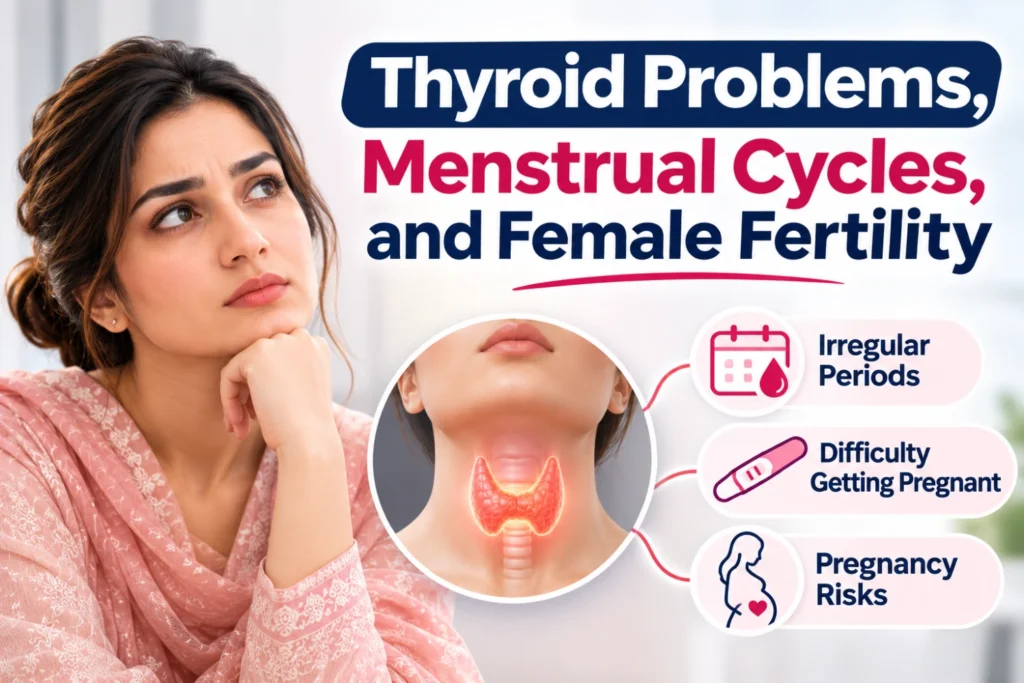
You eat well, sleep reasonably and feel fine. Yet your periods arrive late, or not at all, and pregnancy has not happened. Many women in this position search for answers in the ovaries or the uterus. Sometimes the cause sits in a small gland in the neck, and a routine blood test can find it.
Our supervising doctor, Dr. Sophia Umair Bajwa, explains this link in a video on her YouTube channel. She points out that many women learn about their thyroid problem only after they seek help for infertility or irregular cycles. We see this pattern often at Family Fertility & IVF Center in Lahore, so we check the thyroid early in a fertility workup.
What the Thyroid Does
The thyroid releases hormones that regulate metabolism, heart rate and body temperature. These hormones also influence the ovaries and the brain signals that trigger ovulation. When thyroid levels drift too low or too high, cycles can turn irregular, heavier, lighter or stop altogether. Ovulation becomes less predictable, which lowers your chance of conceiving in any given month.
Hypothyroidism: The Hidden Cause
Hypothyroidism means the thyroid makes too little hormone. Dr. Bajwa notes that most of her thyroid patients have this underactive form. It develops slowly, so women often miss it. Common signs include irregular cycles, difficulty conceiving, unexplained weight gain or loss, fatigue and sensitivity to temperature. Because these signs overlap with many other conditions, only a blood test confirms the cause.
An overactive thyroid, called hyperthyroidism, can also affect fertility. It may cause weight loss, a racing heart and lighter or missed periods. Doctors treat both forms.
Why Untreated Thyroid Disease Matters in Pregnancy
Untreated thyroid disease can raise the risk of miscarriage and other pregnancy complications. Treatment reduces those risks. Dr. Bajwa stresses this point in her video, and it is the main reason we recommend testing and treating early.
How Doctors Test Your Thyroid
Testing takes a simple blood draw. Doctors usually start with TSH, the hormone your brain releases to signal the thyroid. They often add free T4, and they sometimes check thyroid antibodies. Those antibodies help identify Hashimoto’s disease, an autoimmune condition and a common cause of hypothyroidism.
Regular testing matters most if thyroid conditions run in your family or you have had thyroid surgery. Anyone with irregular cycles or fertility trouble should ask for a test too, even without other symptoms.
Treatment With Daily Thyroxine
Most patients with an underactive thyroid take thyroxine, often long term. The tablet replaces the missing hormone, and your doctor adjusts the dose based on blood tests. Take it at the same time every day, usually on an empty stomach, as your doctor directs. Keep calcium and iron supplements several hours apart from it, because they can interfere with absorption.
Pregnancy often raises the dose you need, so your doctor rechecks your levels regularly during that time. Never stop thyroxine on your own.
What to Expect After You Start Treatment
Your doctor usually repeats blood tests within a couple of months after any dose change. Levels settle gradually, so patience matters in the early weeks. Many women notice their cycles becoming more regular over several months, although timing varies. Keep your fertility doctor informed about every dose change, because the right dose can shift when you plan pregnancy.
Thyroid Disease and IVF
If you plan IVF, we check your thyroid first. Untreated thyroid disease can lower your chances of a healthy pregnancy, and treatment improves those odds. Keep taking your thyroxine throughout the cycle unless your doctor says otherwise. Avoid iodine or other supplements unless your doctor recommends them, because too much iodine can harm the thyroid.
Why an Endocrinologist Helps
Dr. Bajwa recommends an endocrinologist, a hormone specialist, for testing and management. Your fertility plan works best when your hormones are balanced before or alongside treatment. Our team reviews how your thyroid results fit into your plan, so each step stays coordinated. Bring your previous thyroid reports to your first visit. A history of earlier results shows whether your levels have changed over time, and that guides how we plan your treatment.
Frequently Asked Question
Can thyroid problems cause irregular periods?
Yes. Both underactive and overactive thyroids can change cycle length and flow.
Can hypothyroidism stop me from getting pregnant?
It can make ovulation irregular and lower your chance of conceiving. Many women conceive once treatment restores normal hormone levels.
What thyroid level is best for getting pregnant?
Many fertility doctors aim for a TSH below 2.5 mIU/L before conception, though guidelines vary. Your doctor sets your personal target.
What if my TSH is high but I feel fine?
A high TSH can still affect ovulation and pregnancy, even when you feel well. Ask your doctor whether you need treatment and how often to recheck.
Do I need thyroid medicine during pregnancy?
If you have hypothyroidism, usually yes. Never stop thyroxine on your own. Stopping can raise pregnancy risks.
How long do periods take to regulate after thyroid treatment?
It varies. Many women see improvement within a few months. Your doctor tracks your levels and your cycle.
Can I get pregnant with Hashimoto’s?
Many women do. Doctors treat the thyroid and monitor levels closely before and during pregnancy.
Should I see an endocrinologist or a gynecologist?
Both can help. An endocrinologist manages your thyroid, and your fertility doctor manages your treatment plan.
Can I have a thyroid problem without symptoms?
Yes. Many women have mild or silent thyroid imbalance. That is why testing matters when you have fertility concerns.
Dr. Bajwa covers these in her YouTube video. Watch it, then compare her list with your own symptoms. Questions about your thyroid and fertility? Leave a comment below or under the video, and we will answer in a follow-up. If you want a personal review, you can visit us at Family Fertility & IVF Center in Lahore.