
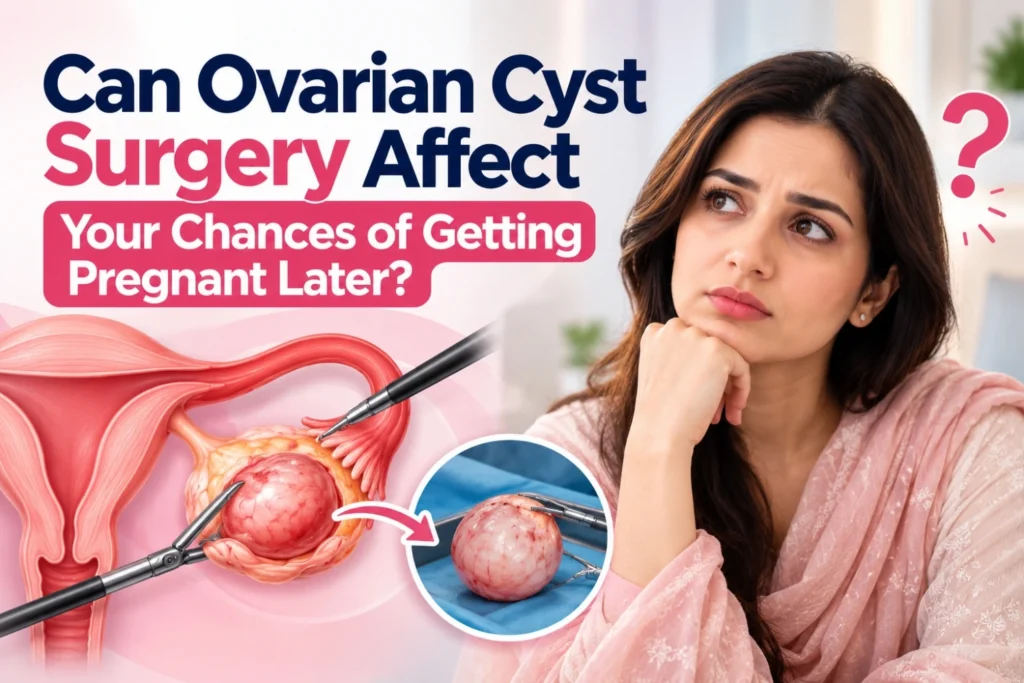
Taking out an ovarian cyst may seem like the obvious step. But the ovary that holds the cyst also holds your eggs. If too much healthy tissue goes with it, your future fertility can shrink. How the surgery is done decides how much is protected, and that is a question worth asking before the operation, not after.
Dr. Sophia Umair Bajwa is a fertility specialist at Family Fertility & IVF Center in Lahore. In her video, she takes viewers inside a laparoscopic surgery. She shows how she removes ovarian cysts while preserving the ovaries and protecting healthy ovarian tissue. This blog explains the key ideas from that video.
The Core Principle: Protect the Ovary
Removing the cyst is only one part of the process
A cyst needs to be treated, but that is not the whole goal. The ovary must stay healthy enough to do its work afterward. Dr. Bajwa stresses that preserving the ovary matters just as much as removing the cyst. A good operation achieves both.
This priority becomes more important for women who plan to have children later. Surgery done now should not limit options in the years ahead. Fertility planning belongs in the operating room, not only in the clinic. Surgeons who plan this way will often discuss your reproductive goals before the first incision.
Why healthy tissue matters
The ovary contains follicles, and each follicle holds an egg. When healthy tissue is removed or damaged, the number of follicles can fall. A lower supply of eggs can reduce the chance of conceiving, especially with age. For this reason, every millimeter of healthy tissue counts. This is why the amount of tissue left behind is a meaningful measure of a good operation.
How a cyst sits in the ovary
A cyst often grows on or inside ovarian tissue. The surgeon has to separate it carefully from the healthy tissue around it. This step needs patience and precision. Rushing it can lead to the loss of tissue that should have been left in place.
Different cysts behave differently. Some are filled with fluid and form on the surface. Others, such as endometriosis-related cysts, may be more closely attached to ovarian tissue. A surgeon who understands these differences can choose the safest way to remove each one.
Why Surgical Technique Matters
What laparoscopy involves
Laparoscopy is a form of minimally invasive surgery. The surgeon makes a few small incisions rather than one large cut. A tiny camera sends a magnified image of the ovary to a screen. This close view supports careful, controlled work.
Potential benefits for recovery
Dr. Bajwa explains that laparoscopy may support a quicker recovery. Smaller cuts usually mean less pain and a shorter stay. Many women return to daily routines sooner than they would after open surgery. Results vary, so your surgeon can explain what to expect in your case. Less time in hospital also means less time away from work and family.
Precision and fertility
The magnified view helps the surgeon see where the cyst ends and healthy tissue begins. That makes it easier to remove the cyst while sparing the rest of the ovary. For a woman who wants children in the future, this precision is a major advantage. It is one reason laparoscopy is widely used in fertility-focused surgery.
Choosing the Right Surgeon
Look for fertility-focused experience
Surgeons differ in what they prioritize. Some focus on removing the cyst quickly. A fertility specialist also thinks about the ovary, the eggs and the patient’s plans for pregnancy. That broader view affects how the operation is carried out.
Patients in Lahore who want this approach can consult Family Fertility & IVF Center. The team assesses the cyst and the patient’s fertility goals together before recommending a plan. That helps ensure the surgery fits the patient’s future, not just her present symptoms.
Questions to ask before surgery
A few direct questions can make the decision clearer. Ask whether surgery is truly needed, since not every cyst requires it. Ask whether the operation will be laparoscopic. Ask how the surgeon plans to protect healthy ovarian tissue.
Also ask about your AMH level. AMH is a blood marker linked to ovarian reserve. Knowing it before surgery gives you a baseline and helps your doctor plan with your fertility in mind.
Preparing for Surgery
Get the right tests
An ultrasound shows the size and type of the cyst. An AMH test shows your ovarian reserve. Together, they help your doctor decide whether to operate, monitor or choose another route. Bring any earlier reports with you, since a comparison over time is often more useful than a single scan. Good decisions rest on good information.
Share your future plans
Tell your doctor if you want children, even if that is years away. This detail can change how the surgery is planned. It also helps the doctor advise you on timing. Clear communication leads to better outcomes. Even a brief note in your file can guide future care.
Confirm that surgery is necessary
Some cysts shrink or disappear without treatment. Others need monitoring over a few cycles before any decision is made. Surgery is appropriate when the cyst is large, causes symptoms or does not resolve. Your specialist can explain which case applies to you.
Planning for Pregnancy After Surgery
Allow time to heal
Recovery time depends on the procedure and on the individual. Follow your doctor’s advice on rest and activity. Trying to conceive too early may not be advisable in every case. Ask for a clear timeline. Gentle activity is usually encouraged, but heavy exertion may need to wait. Your surgeon will tell you what is safe for your case.
Keep your follow-up visits
Follow-up appointments show how well the ovary is healing. They also help confirm when it is reasonable to start trying. Skipping them can delay the detection of any problem. Regular reviews keep your plan on track.
Seek fertility advice if needed
If pregnancy does not occur within a reasonable period, speak with a fertility specialist. Age, AMH and overall health all shape the next steps. Early advice avoids unnecessary delay. Waiting without a plan can cost valuable time. Treatment can then be matched to your situation.
Conclusion
Ovarian cyst surgery does not have to harm fertility. The outcome depends on the technique, the surgeon’s focus and how well healthy tissue is protected. Laparoscopy supports this goal, and a fertility-focused surgeon makes the difference. Asking questions early is not a sign of doubt. It is part of making a safe, informed choice about your body and your future.
Women who want guidance before surgery can book a consultation at Family Fertility & IVF Center in Lahore. A specialist can review your scans, check your AMH and explain the safest approach for your plans.
Watch the Procedure
Dr. Sophia Umair Bajwa explains the laparoscopic technique on her YouTube channel. The video shows how a cyst is removed while the ovary is preserved. After watching, leave a comment here or on the video with your questions, and we will answer them in a future post.