
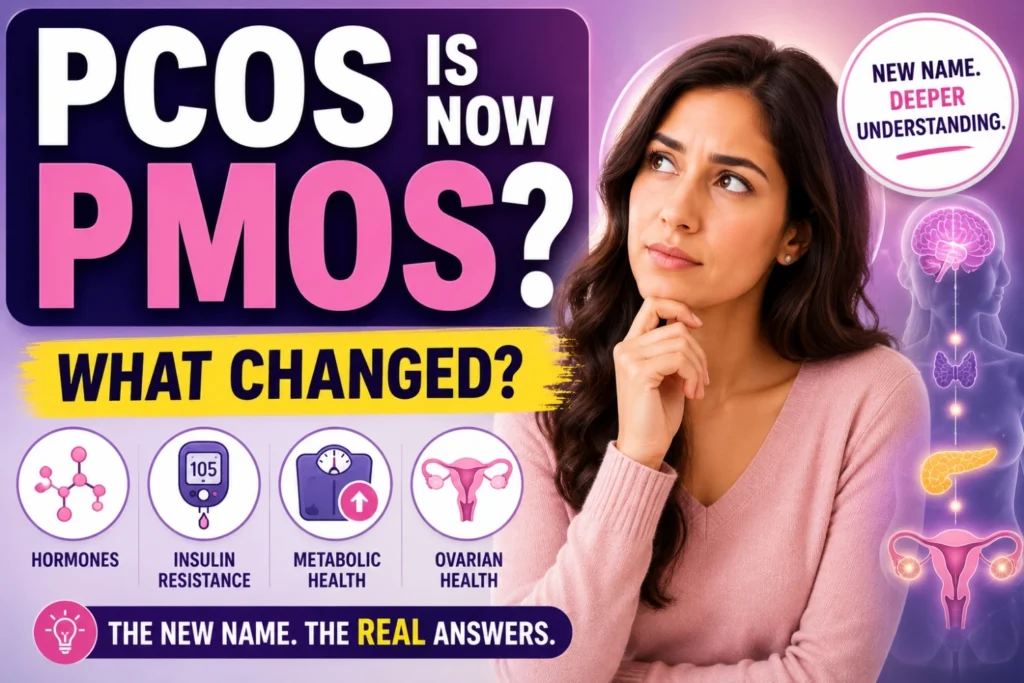
It is so common to feel like you are doing everything right with your health but still missing pieces of the puzzle. In May 2026, the medical community renamed PCOS to PMOS. And if you’ve been struggling with hormonal issues, this update might be the most important information you read this year.
The old name misled millions into thinking their ovaries were the sole problem. The new name: Poly-Endocrine Metabolic Ovarian Syndrome finally acknowledges the deeper systemic dysfunction happening across your endocrine and metabolic systems. Keep reading, because the truth behind this renaming explains a lot of unanswered questions.
Why Was PCOS Renamed PMOS?
PCOS = Polycystic Ovarian Syndrome. PMOS = Poly-Endocrine Metabolic Ovarian Syndrome.
The old name made it sound like a problem that lives in the ovaries. The new name finally says what researchers have known for years: this condition affects the entire hormonal and metabolic system.
The ovaries are not the cause. They are the result.
Why did it take this long?
That is a fair question to ask.
The truth is, research had been pointing in this direction for a long time. Studies consistently showed:
- Insulin resistance in up to 70% of women with PMOS, regardless of their weight
- Elevated androgens linked to adrenal gland dysfunction, not just ovarian activity
- Disrupted signaling across the hypothalamic-pituitary-ovarian axis
- Metabolic complications affecting the liver, pancreas, and cardiovascular system
The name PCOS stuck around because of tradition, not because it was accurate. The renaming in May 2026 was overdue.
Is PMOS Just an Ovarian Problem?
No. And this is where the confusion has caused real harm.
The ovaries are affected, but they are not where the problem starts.
PMOS is rooted in the endocrine system, specifically in how hormones signal each other across the body. When that signaling breaks down, multiple systems are pulled into the dysfunction.
What is involved:
- The adrenal glands which contribute to androgen overproduction
- The pancreas through disrupted insulin pathways
- The hypothalamus and pituitary gland which regulate the entire reproductive hormonal cycle
- The liver, increasingly linked to metabolic dysfunction in PMOS
- The ovaries which react to all of the above
Treating only the ovaries and calling it done is like addressing a house fire by opening a window. The approach was too narrow.
Can Weight Loss Cure PMOS?
Weight loss helps. It does not cure.
Losing even 5 to 10 percent of body weight has real, documented benefits:
- More regular menstrual cycles
- Improved insulin sensitivity
- Lower androgen levels
- Better chances of natural ovulation
These improvements are meaningful. But the moment lifestyle changes slip, symptoms come back. Weight loss manages the condition. It does not eliminate the underlying hormonal wiring.
PMOS is a lifelong condition. Sustainable lifestyle change is the goal, not a short-term fix.
Will PMOS Go Away After Pregnancy?
This is one of the most common misconceptions.
Pregnancy changes the hormonal environment temporarily. Some women notice their symptoms calm down during or after having a baby. That improvement feels like a cure.
It is not.
Once menstrual cycles resume and hormone levels settle back into their pre-pregnancy pattern, PMOS symptoms return. The insulin resistance is still there. The androgen sensitivity is still there. The root cause was never addressed.
Pregnancy is not a treatment for PMOS.
Can Ovarian Drilling or Laparoscopy Cure PMOS?
It can help with ovulation. It cannot fix the condition.
Ovarian drilling is a procedure where small punctures are made on the ovary’s surface to reduce androgen production and stimulate ovulation. For some women with fertility challenges, it offers a short-term window where ovulation becomes more regular.
But the effects last roughly one to two years for most women.
Why? Because the procedure does not touch the metabolic dysfunction. It does not correct insulin resistance. It does not fix how the adrenal glands are producing excess androgens. Surgery on the ovary cannot reprogram a systemic hormonal problem.
It is a tool, not a solution.
Why Does PMOS Raise the Risk of Diabetes?
Up to 70% of women with PMOS have insulin resistance, even those who are lean.
Here is how the cycle works:
- Cells stop responding normally to insulin
- The pancreas produces more insulin to compensate
- High insulin stimulates the ovaries to produce more androgens
- High androgens disrupt ovulation and drive PMOS symptoms
- The cycle continues, and metabolic risk builds quietly over time
Women with PMOS are up to 4 times more likely to develop Type 2 diabetes compared to women without it.
Long-term health risks every woman with PMOS should know:
- Type 2 diabetes
- Cardiovascular disease
- Endometrial cancer (from long-term absence of ovulation)
- Non-alcoholic fatty liver disease
- Sleep apnea
- Higher rates of anxiety and depression
These are not scare tactics. These are documented outcomes from large-scale studies. Early management genuinely reduces these risks.
How Can PMOS Be Successfully Managed?
It cannot be cured. But it absolutely can be controlled.
The right approach targets the metabolic and hormonal dysfunction at the root, not just the surface symptoms.
Lifestyle changes that make a real difference:
- Low glycaemic index diet to reduce insulin spikes
- Regular aerobic and resistance exercise
- Cutting down on ultra-processed foods and refined carbs
- Consistent sleep routine (poor sleep worsens insulin resistance directly)
- Stress reduction through structured daily habits
Medical options depending on individual needs:
- Metformin to improve insulin sensitivity
- Hormonal contraceptives to regulate cycles and lower androgens
- Letrozole or clomiphene for ovulation induction when trying to conceive
- Anti-androgen medications for hair and skin symptoms
- Inositol supplements, which have growing clinical evidence for improving ovulation and insulin response
If you are dealing with irregular cycles, difficulty conceiving, unexplained weight gain, or persistent hormonal symptoms, a proper evaluation is the starting point.
Family Fertility & IVF Center in Lahore provides comprehensive assessment and treatment for PMOS, from hormonal workups to fertility support.
Dr. Sophia Umair Bajwa works closely with patients at Family Fertility & IVF Center to understand what went wrong and designs a personalized prevention plan before the next conception attempt. For women who have invested years in IVF, this step-by-step review is essential.
To explore these topics in more depth, visit Dr. Sophia Umair Bajwa’s YouTube channel. Her videos explain treatments like progesterone therapy, cervical cerclage, and laparoscopic cerclage in plain, practical language, and they address the exact questions patients often struggle to ask in a clinic setting.
Frequently Asked Questions
Is PMOS the same as PCOS? Yes. PMOS is the new, medically accurate name for the same condition. The science behind it has been updated significantly.
Can a woman with PMOS conceive naturally? Many do, especially with lifestyle changes and targeted treatment. For those who need additional help, fertility support options are available with strong success rates.
Does PMOS only affect overweight women? No. Lean women can have PMOS too. Insulin resistance, which drives much of the condition, is present in women across all body types.
What tests are needed to diagnose PMOS? A combination of hormonal blood panels, fasting insulin and glucose tests, and a pelvic ultrasound alongside a clinical history. Diagnosis is not based on ultrasound alone.
Does PMOS affect mental health? Research consistently shows higher rates of anxiety and depression in women with PMOS. Hormonal fluctuations and the challenge of managing a chronic condition both play a role.
At what age does PMOS typically appear? It often surfaces in the teenage years or early twenties. Some women are not diagnosed until they start trying to conceive.
Reach out to Family Fertility & IVF Center in Lahore for expert guidance and a proper medical evaluation.