
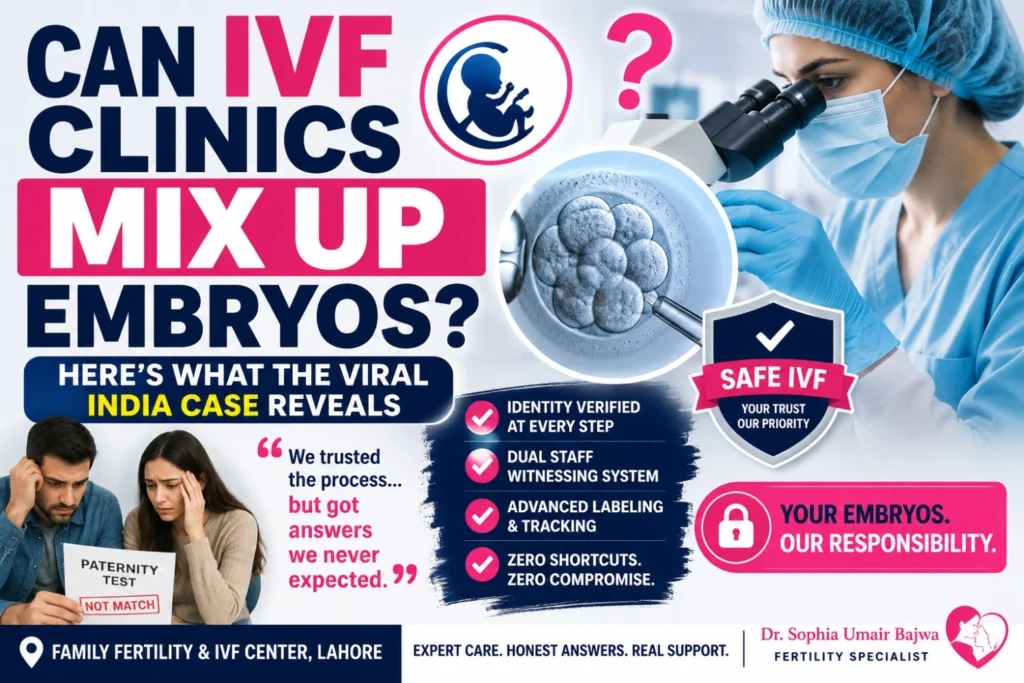
Embryo mix-ups are rare, but the fear is real for every couple starting IVF. A recent viral case out of India brought that fear to the surface again, and this blog covers what actually happened and what stops it from happening in a well-run lab.
Family Fertility & IVF Center is sharing this because couples deserve clarity before they walk into a fertility clinic, not after something goes wrong. Read on before making any decision about where to start treatment.
The Viral IVF Case That Shook Couples
A Delhi area fertility clinic made headlines after a couple discovered through a paternity test that their twins were not biologically theirs. The news spread fast, and for good reason.
What Was Reported
According to the reports, the couple had gone through IVF expecting their own biological children. A paternity test later suggested a possible mix-up of sperm or embryo samples during the process. The case is still under scrutiny, but the allegation alone was enough to shake public confidence.
Why It Went Viral
Fertility treatment already comes with emotional weight. Add the fear of a lab error, and it becomes every patient’s nightmare. Couples across the world started asking their own clinics the same question: how do you make sure this never happens to us?
Can Embryo Mix-Ups Really Happen?
Yes, in theory, human error can happen anywhere samples are handled by people. But a properly run IVF lab builds multiple checkpoints specifically to catch mistakes before they reach the patient.
How Rare Are These Cases
Cases like the Delhi incident make global news precisely because they are so uncommon. Reputable IVF labs follow strict chain of custody protocols, and when followed correctly, the risk of a mix-up drops close to zero.
Quick summary of what protects your samples:
- Verified identity checks before every procedure
- Dual staff witnessing for every sample handled
- Clear, permanent labeling at each stage
- No third party donor use unless explicitly agreed upon by the couple
The Safety Checks That Prevent IVF Sample Mix-Ups
Dr. Sophia Umair Bajwa addressed this exact concern, explaining the internal safety systems used at her clinic to protect every couple’s biological material.
Identity Verification Before the Procedure
Before any retrieval or transfer, patient identity gets confirmed multiple times. This is not a single formality. It typically includes:
- The patient stating their name before sedation
- Verbal confirmation by the embryologist
- Verbal confirmation by the anesthesia doctor
- Verbal confirmation by the scrub nurse
- Final confirmation by the primary doctor
Five separate checks before a single sample moves. That level of repetition exists for a reason.
Inside the IVF Witnessing Process
Here is where most patients have no idea what happens behind the scenes. IVF labs use a witnessing system, meaning one staff member handles a sample while a second staff member independently observes and verifies the entire process.
Nothing gets processed by a single person alone. If a mismatch is caught at any point, the procedure stops immediately.
Labeling Protocols
Every sample gets labeled at each stage of handling, from collection to fertilization to storage. Clinics that follow international lab standards treat labeling as a legal requirement, not a suggestion.
What Makes a Fertility Clinic Trustworthy
Trust in fertility care is not built on marketing. It is built on visible, explainable protocols. A clinic worth choosing should be able to answer, clearly and without hesitation, how it protects patient samples.
Dr. Sophia Umair Bajwa has been open about this, stating that only the husband’s sperm and the wife’s eggs are used in standard cases, with no third party donors involved unless a couple specifically requests that path.
Questions Every Patient Should Ask Their Clinic
Before starting treatment anywhere, ask these questions directly:
- What identity verification steps do you follow before retrieval?
- Do you use a witnessing system for sample handling?
- Can patients request testing or verification after treatment?
- How are samples labeled and tracked through each stage?
A clinic that answers these without hesitation is a clinic that takes accountability seriously.
About Family Fertility & IVF Center
Family Fertility & IVF Center in Lahore operates on the same principle patients should demand from any fertility clinic: full transparency, verified protocols, and zero shortcuts when it comes to sample safety.
As one of the trusted names among IVF centers in Lahore, Family Fertility & IVF Center believes patients have every right to ask hard questions and expect honest answers. Anyone comparing the best IVF center in Lahore Pakistan should look for exactly the kind of protocols explained above.
For a deeper look into how these protocols work in practice, Dr. Sophia Umair Bajwa’s YouTube channel covers this topic and others patients frequently ask about.
Frequently Asked Questions
Can IVF clinics accidentally swap embryos?
It is extremely rare when a clinic follows strict verification and witnessing protocols. Most reported cases involve lapses in identity checks or labeling, which reputable clinics actively prevent through multiple safeguards.
How do IVF labs prevent mixing up sperm or eggs?
Labs use identity verification at multiple stages, along with a witnessing system where a second staff member independently confirms every sample handled by the first.
Can I request a paternity test after IVF treatment?
Yes, patients have the right to request testing. A trustworthy clinic will support this and take responsibility for the outcome rather than discourage the request.
Is IVF safe after the recent embryo mix-up news?
IVF remains a safe and well established treatment. Isolated incidents at specific clinics do not reflect the standard followed by clinics with strict identity and witnessing protocols in place.
What should I check before choosing an IVF clinic?
Ask about identity verification steps, sample witnessing systems, labeling protocols, and if the clinic allows separate testing after treatment.
Unsure about something? Drop a comment here or on Dr. Sophia Umair Bajwa’s YouTube video, and we’ll do our best to answer your questions. We may also cover your question in a future video or blog if it could benefit other people.
You can also visit our clinic to discuss your fertility concerns with Dr. Sophia Umair Bajwa.