
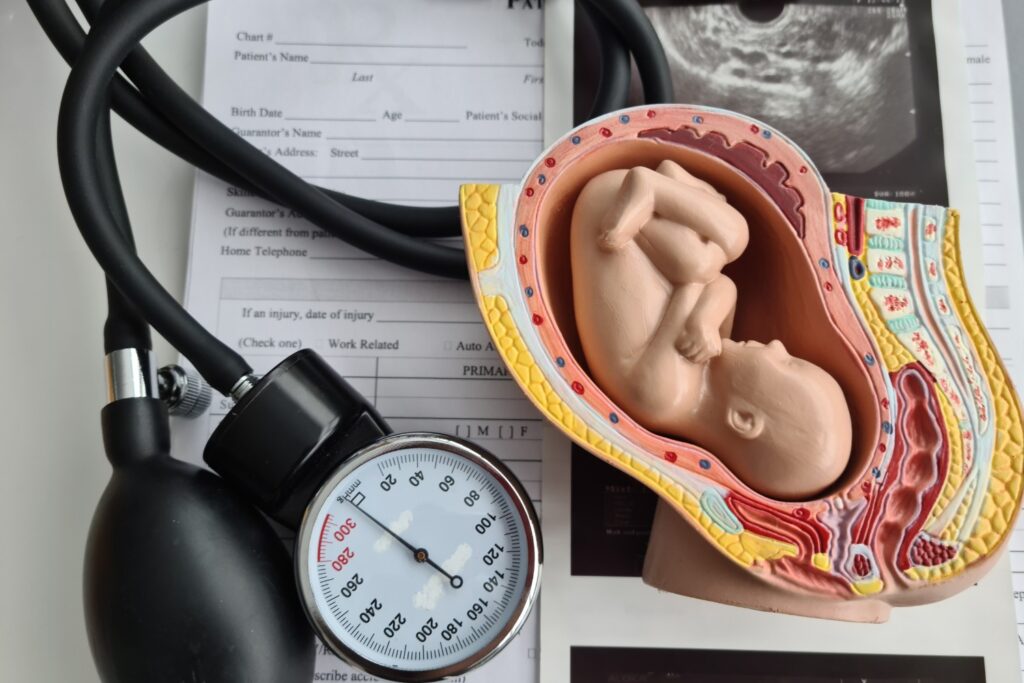
At the 20-week anomaly scan, many women hear the words “low-lying placenta” for the first time. It sounds worrying because anything close to the cervix feels risky. In reality, this finding appears in about 1 in 10 pregnancies at 18-22 weeks.
The placenta often starts lower early on, but as the uterus grows upward, the distance to the cervix usually increases naturally. Around 90% of cases resolve on their own by the third trimester.
This blog covers the full picture: the reason behind the early low position, how 9 out of 10 placentas end up safely higher, the key differences from previa, practical steps to take, warning signs to monitor, and what to expect on delivery day.
Keep reading… the facts will likely replace worry with relief.
What Low-Lying Placenta Actually Means
The placenta is the baby’s life-support system. It attaches to the wall of the uterus and sends oxygen and food through the umbilical cord. Normally it sits high up, far from the cervix. When it attaches lower down, closer to the opening of the cervix, doctors call it low-lying.
At 18-22 weeks the lower part of the uterus is still short. The placenta often starts lower than it will end up. As pregnancy progresses, the uterus grows upward like a balloon filling with air. The placenta stays where it is attached, but the cervix moves farther away. That’s why most low-lying placentas “move up” on their own.
How Common Is This Really?
Very common. Around 1 in 10 women get this note on their 20-week scan. When the distance from the placenta edge to the cervix is between 0 and 2 cm, doctors label it low-lying. If it’s completely covering the cervix, that’s placenta previa, a different, more serious story.
The overwhelming majority of low-lying cases (about 90%) clear up by 32-36 weeks. The follow-up scan shows the placenta sitting comfortably high. Women who were terrified at 20 weeks often laugh about it later.
When It Actually Becomes a Problem
If the placenta stays within 2 cm of the cervix after 32 weeks, the picture changes. When it covers the cervix partially or fully, it’s called placenta previa. That version can cause painless bright red bleeding, usually after 20 weeks. The bleeding can be light spotting or heavy enough to need hospital admission fast.
Previa is much less common than early low-lying. Risk goes up with previous cesarean sections, multiple pregnancies, age over 35, or smoking. But plenty of women develop it without any obvious reason.
What Doctors Usually Tell You to Do
The advice is straightforward and mostly cautious:
- Avoid sex until the next scan clears it
- No heavy lifting or hard exercise
- Skip activities that involve a lot of bouncing or straining
- Call immediately if you see any bleeding or spotting
Most women don’t need strict bed rest. They keep working, walking, driving, just with those sensible boundaries. The restrictions feel annoying, but they help avoid irritating the area.
Placenta Previa And How It Affects Delivery
Persistent placenta previa means vaginal delivery is off the table. Trying to push with the placenta in the way can cause serious bleeding. Planned cesarean section at 36-37 weeks becomes the safest route.
Hospitals prepare carefully for these deliveries. Blood is cross-matched and ready. The team is bigger. The operation is calm and controlled. Babies come out healthy. Mothers recover well. The scary stories online usually come from older cases or unmanaged situations. Modern care handles previa smoothly.
What Most Women Don’t Hear About Low Placenta
The days between the first scan and the follow-up feel endless. Every little twinge makes you worry. You start reading forums at 2 a.m. and leave feeling worse. The truth is simple: the early finding is almost always harmless. The body does most of the work. The extra scans just make sure everything stays on track.
Women often feel guilty, as if they caused it. Almost never true. The placenta picks its spot randomly. Blame biology, not anything you ate or did.
Typical Delivery Scenarios With Low-Lying Placenta
Low-lying placenta that resolves → normal delivery, no restrictions after clearance.
Persistent previa → planned C-section, safe arrival, healthy recovery.
Either way, the baby arrives. The worry fades. The diagnosis becomes just another pregnancy story you tell later.
You’re Always Welcome At Family Fertility & IVF Center
Low-lying placenta at 20 weeks sounds alarming. Most of the time it quietly fixes itself. A couple of extra scans, some temporary rules, and patience. That’s usually all it takes. Knowledge beats fear every time. Step by step, scan by scan. That’s the safest approach.
For any assistance or future treatments, Family Fertility & IVF Center in Lahore is the place to trust. Dr. Sophia Umair Bajwa is among the most trusted specialists in her field. You can count on her expertise for safe and confident care.
Got a pregnancy topic that’s keeping you awake? Drop it in the comments here or on the YouTube video. The next post might be exactly what you need.
Most women walk out of that follow-up scan relieved and a little embarrassed about how much they worried. The odds are heavily on your side. Breathe. Keep going. It’s almost always fine.