
AMH 0.3. Nine years of infertility. No IVF budget. Most people reading that combination would quietly assume the story ends there. It didn’t.
This is a real patient case from Family Fertility & IVF Center in Lahore. A woman came in carrying nine years of failed attempts, a severely low AMH result, and a very honest financial constraint. IVF wasn’t an option for this couple. That didn’t mean pregnancy wasn’t.
What followed was a structured, alternative approach using ovarian PRP therapy, targeted medications, and close follicle monitoring. A few months later, she conceived naturally. No IVF. No shortcuts. Just the right treatment applied correctly for the right candidate.
AMH of 0.3 is considered critically low. It reflects a significantly diminished ovarian reserve, which is one of the most challenging fertility barriers to work around. And yet, in specific cases, it is not an absolute dead end.
What Is AMH and Why Does It Matter So Much?
AMH stands for Anti-Müllerian Hormone. It’s produced by the small follicles in the ovaries and serves as one of the most reliable markers of ovarian reserve. A higher AMH generally means more eggs in storage. A lower AMH means that reserve is depleted.
Normal AMH for a woman of reproductive age typically sits between 1.0 and 3.5 ng/mL. At 0.3, the ovarian reserve is severely diminished. For most clinics, this number triggers an immediate recommendation toward IVF with aggressive stimulation or even donor eggs.
The Problem With a Single-Track Solution
Here’s where standard fertility advice can sometimes miss the mark. AMH is a quantity marker. It tells you how many follicles are likely available, but it doesn’t fully tell you about egg quality or the ovary’s remaining functional capacity. A low AMH means fewer eggs. It doesn’t always mean zero chance of natural conception, especially when the right support is given to the ovaries at the right time.
That distinction matters enormously for couples who either can’t afford IVF or want to explore every reasonable option before going that route.
What Is Ovarian PRP Therapy?
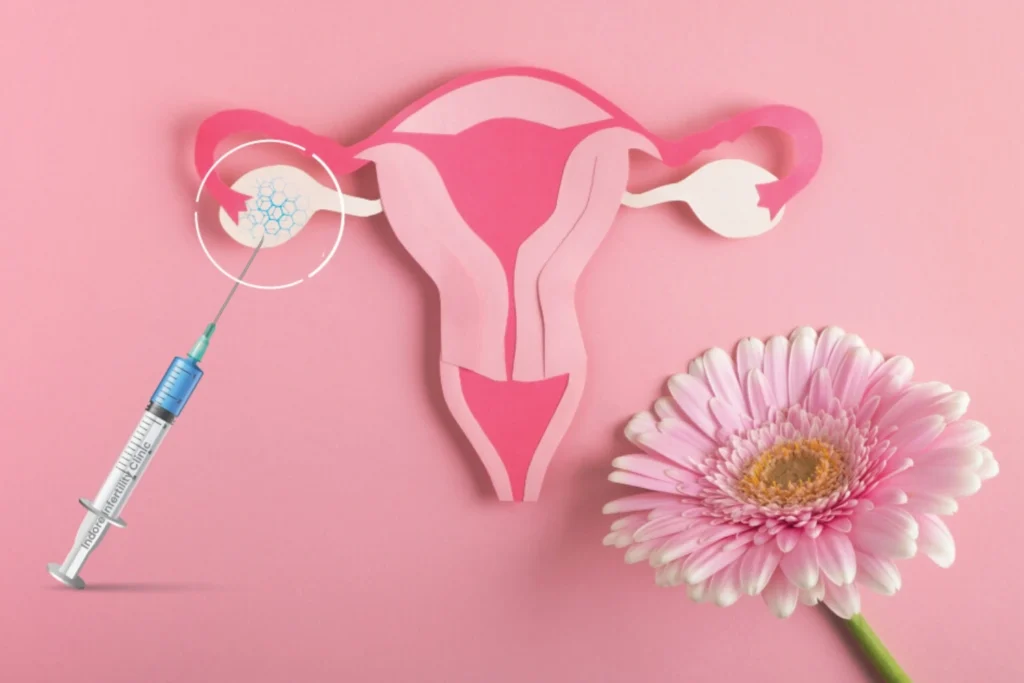
PRP stands for Platelet-Rich Plasma. In a fertility context, ovarian PRP involves extracting a small amount of the patient’s own blood, processing it to concentrate the growth factors and platelets, and then injecting that concentrate directly into the ovarian tissue.
The goal is to trigger a regenerative response in the ovary. Growth factors in PRP are known to stimulate cellular repair and tissue regeneration. In the context of a depleted ovarian reserve, the idea is to encourage whatever remaining follicular activity exists and improve the microenvironment around those follicles.
How PRP Was Applied in This Case
For this patient, the treatment protocol began with ovarian PRP therapy to prime the ovaries. This was followed by carefully selected fertility medications to stimulate follicle development without overstimulating an already fragile system. Throughout the process, follicle growth was monitored closely through regular ultrasound scans.
Dr. Sophia Umair Bajwa designed the protocol specifically around this patient’s profile, factoring in her AMH level, her age, her history, and the couple’s financial reality. There was no generic template being applied. The approach was built around her specific situation.
When a mature follicle was confirmed and the timing was right, the couple was guided on the optimal window for natural conception. The pregnancy was confirmed shortly after.
Does PRP Work for Everyone With Low AMH?
This is the question worth answering honestly rather than optimistically. Ovarian PRP is not a universal fix for low AMH infertility. The research is still evolving, and results vary depending on individual patient factors.
Conditions Where This Approach Can Work
PRP tends to show the most promise in younger patients with diminished ovarian reserve who still have some residual follicular activity. If the ovary has completely lost all functional capacity, PRP has very little to work with. The presence of even minimal follicular activity gives the treatment something to amplify.
Other favorable factors include a shorter duration of infertility (relative to the case presented here, this patient was an exception given her 9-year history), absence of severe structural or tubal issues, and a partner with normal or near-normal semen parameters.
Cases Where IVF Still Offers the Highest Success
PRP is not a replacement for IVF. In cases with very low AMH combined with additional fertility challenges, advanced maternal age, or time-sensitive circumstances, IVF remains the most effective and reliable option. The higher the complexity of the case, the stronger the argument for IVF.
What ovarian PRP offers is a viable middle ground for patients who have some ovarian function remaining and either cannot pursue IVF immediately or want to try a less invasive route first. It fills a genuine gap that standard fertility protocols don’t always address.
Nine Years Is a Long Time to Wait for the Right Answer
What makes this case particularly striking is the duration. Nine years is not a short struggle. This patient had likely been through consultations, treatments, and the kind of repeated disappointment that chips away at hope quietly over time. Finding the right approach at Family Fertility & IVF Center and getting a result within a few months after all that time is not a small thing.
It also raises a fair point about the value of exploring alternatives before giving up or assuming IVF is the only viable path. For some couples, especially those dealing with financial limitations, a well-planned alternative protocol can deliver what years of standard guidance couldn’t.
Full Fertility Evaluation and Treatment Under One Roof
For consultations, second opinions, or a full fertility workup, Family Fertility & IVF Center in Lahore is the right place to start. Whether the path forward is PRP, IVF, or something else entirely, the team will work through it with full transparency.
Dr. Sophia Umair Bajwa has documented this case in detail on her YouTube channel. The video walks through the AMH numbers, the reasoning behind the PRP approach, the step-by-step treatment timeline, and the outcome. If low AMH infertility is something that personally resonates, that video is worth watching in full. The channel covers real cases with clinical depth that goes beyond generic fertility advice.
The YouTube channel is a resource worth exploring if fertility-related questions keep coming up without clear answers. Real patient cases, clinical explanations, and honest discussions about what works and what doesn’t.
Share Any Questions or Topics You’d Like Us to Discuss
If there’s a fertility concern, a specific condition, or a treatment option that’s been on your mind and you haven’t found a clear answer anywhere, leave it in the comments below or on the YouTube video. The team reviews them and designs content around what the audience actually needs to know.
AMH 0.3. Nine years. Natural conception. The story exists because the right question was asked at the right place. Ask yours.
Family Fertility & IVF Center, Lahore, Pakistan | Ovarian PRP & IVF Specialists