
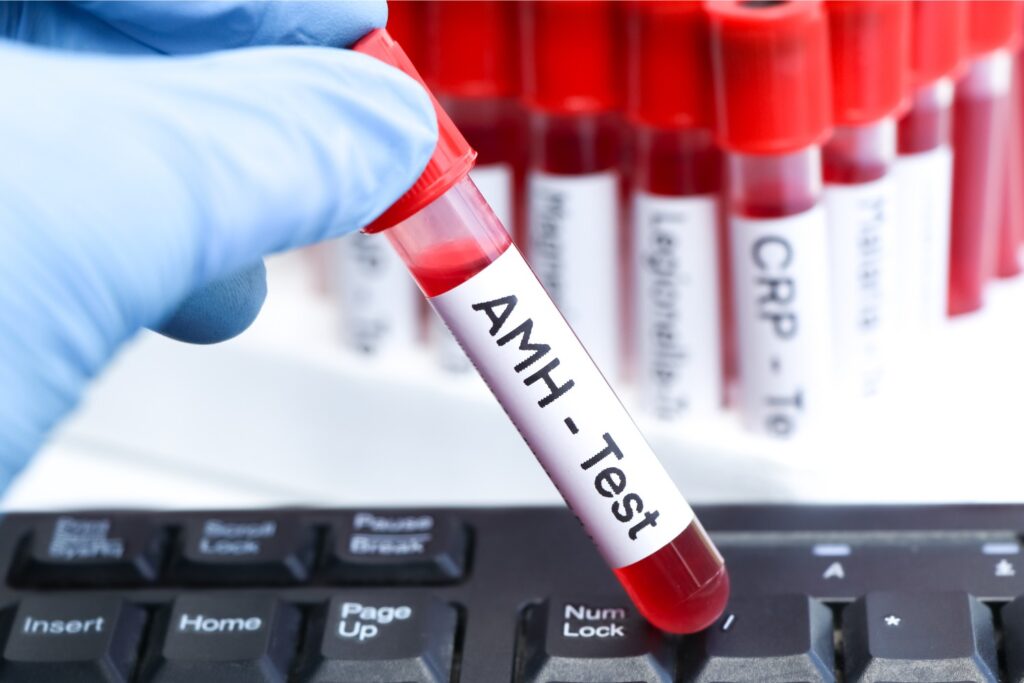
AMH stirs strong reactions. The moment the number appears on a report, panic usually follows. Phones come out. Google tabs open. Screenshots get forwarded to friends, cousins, and random online groups. Within minutes, hope either sky rockets or crashes.
Most of that reaction comes from misunderstanding. AMH is one of the most misinterpreted fertility hormones. It gets blamed for everything. Gets praised for nothing. It gets turned into a verdict when it was never meant to be one.
What AMH Actually Measures
AMH stands for Anti Mullerian Hormone. It reflects how many eggs are sitting quietly inside the ovaries. Does not measure egg quality. It does not predict natural pregnancy. It does not decide worth.
AMH gives an idea of ovarian reserve. That is all. A higher number means more eggs remain. A lower number means fewer eggs are available. It says nothing about how good those eggs are. Quality depends mostly on age. This is where confusion begins.
Low AMH Doesn’t Always Mean No IVF Options
Low AMH often gets delivered badly. A single number. No explanation. No context. AMH of 1.2 and below falls into the low range. That does not mean infertility. It means fewer eggs respond during treatment. Many women with low AMH still ovulate naturally. Many conceive with support. Some conceive without assistance. Low AMH limits quantity, not possibility.
What Your AMH Number Means for IVF Possibilities
Here is how AMH values guide treatment decisions. AMH between 0.5 and 1.0 IVF remains possible. Egg yield may be low. Success still exists with proper planning. AMH between 0.2 and 0.5 IVF remains possible.
Expectations must stay realistic. Response to stimulation may be weak. Multiple cycles may be needed. AMH below 0.1 Success becomes very rare. Eggs may not respond even with high doses. These numbers guide strategy. They do not guarantee outcomes.
Understanding the Point Where IVF Isn’t Effective Anymore
There is a point where honesty matters more than optimism. If AMH is zero. FSH is high. Periods appear only with medication or disappear completely. This pattern signals ovarian failure. Ovaries have stopped responding.
IVF cannot create eggs that no longer exist. Offering IVF in this situation only wastes time, money, and emotional energy. Ethical care sometimes means saying no. This refusal protects patients from false hope.
The Role of AMH, FSH, and AFC in Fertility Assessments
AMH alone never tells the full story. FSH reflects how hard the brain is pushing the ovaries to work. High FSH suggests poor response. AFC shows how many small follicles appear on ultrasound. Together, AFC FSH and AMH success rates in IVF become clearer. One number never decides the plan. The combination does. Good clinics evaluate the whole picture.
Age Still Matters More Than AMH
This truth frustrates many people. A younger woman with low AMH often has better outcomes than an older woman with higher AMH. Egg quality declines with age, not AMH. AMH levels by age vary naturally.
AMH hormone levels by age drop over time for everyone. This decline does not mean failure. It reflects biology. Charts showing normal AMH levels by age help set expectations. They should not create panic.
High AMH Is Not Always Good News
High AMH in IVF often appears in PCOS. More eggs exist. Response to stimulation can become excessive. This increases the risk of ovarian hyperstimulation. Protocols must be adjusted carefully. High AMH means quantity. It does not guarantee quality or success. Balance matters more than extremes.
The Risks of Half Information From At-Home AMH Kits
At home tests for AMH fertility hormone kits sound convenient. They create confusion more often than clarity. Without ultrasound and hormone correlation, numbers float without meaning. Self interpretation increases anxiety. AMH belongs inside a clinical conversation, not isolated on a kitchen counter.
IVF Success with Low AMH Depends on Smart Planning
Low AMH IVF success depends on strategy. High doses do not always work. Gentle protocols often perform better. IVF treatment planning involves timing, dosage, and realistic expectations.
Banking embryos may help in some cases. Multiple cycles may be discussed upfront. Diet plan during IVF treatment supports overall health. It does not raise AMH. No supplement reverses ovarian aging. Promises claiming otherwise deserve skepticism.
Donor Eggs: Knowing When They Might Be Needed
Donor eggs become relevant when ovaries no longer respond. This option carries emotional weight. Cultural sensitivity matters. Honest counseling matters more. Success rates improve significantly with donor eggs when ovarian failure exists. This option deserves respectful discussion without pressure.
Zero AMH vs. Low AMH: Why the Difference Matters
AMH was never designed to scare people. It was designed to guide clinicians. Low AMH means fewer chances per cycle. It does not erase chances entirely. Zero AMH means eggs are no longer available. Pretending otherwise helps no one. Understanding this difference changes everything.
Tips for Selecting the Best IVF Clinic for You
Searching for a good IVF center usually leads to flashy marketing. Numbers get quoted. Guarantees appear. Red flags follow. IVF clinics specializing in AMH treatments understand realistic dosing and counseling.
At the Family Fertility and IVF Center, we don’t promise miracles. Treatment only happens when it actually helps. Dr. Sophia Umair Bajwa values honesty over blind optimism, protecting patients emotionally and financially.
Find expert tips and guidance anytime on Dr. Sophia Umair Bajwa’s YouTube channel. For treatment or guidance you can trust, Family Fertility & IVF Center in Lahore is the place. Questions or topic suggestions? Comment here or on YouTube, and we will get back to you with clear answers.